Got pushed.

The hardline stories of growing up always bring me to tears. Although my experiences reflect more of the mundane in middle class white suburbia to their urban decay, I feel the pain and powerlessness of those neglected children. These emotional images swell up inside me, and inevitably become tears.

The recreated stories of disenfranchised urban poor children, so diametrically different from me on the outside, seems all to familiar on the inside. Once told, I, all too well, feel their violation – their intuitive desire to shut the feelings out – to hide through fantasy in a different, more perfect life – to survive. Driven by an unending fear, the shame and loneliness overwhelms, stymying any forward actions the damage child may want to take.

After such reads, I try to comprehend my voice, but pull back, comparing and judging my less dramatic circumstances. I wonder if my aptitude of empathy and compassion is only driven by my affluent guilt. When I remove those judgements from my feelings, and just feel someone else’s life’s pain, I can more rationally tell the story that would need telling – see the story more objectively. The opportunity to advocate then opens up, and I can more confidently move forward with my job to tell the story.

Posited to offer a means by which those who have the power to change the world will listen, I attempt to consider classroom activities that hopefully provides students the opportunity to comprehend the exact nature of the wrongs these disenfranchised people experienced; to accept that such circumstances, despite 21st century progressiveness, exist; and to encourage participation in more compassionate and meaningful acts to change the system that has allowed such harms to exist. Perhaps, in some slight way, advanced high schools should be ethical think tanks for a more progressive society. These school’s influential students, who are on the path to become influential adults, would take part in the dialectic discourse that questions not only the ethics of the system they are working towards joining, but the validity of that system in and of itself.

Unadulterated competition destroys bonds of compassion and empathy because by its nature the weak must be obliterated by the strong to perpetuate its place of power. All are become subjects to the system, which has no moral obligation. In Darwinian social norms, the strong survive and prosper over the dispensable weak. This thinking does not account for any real application of equality of condition in accessing opportunity.  Although we have institutionally set out to undo the separate but equal mentality, we have not considered how defacto inequality persists. In fact, history clearly illustrates that defacto discrimination persists despite democratic legislative efforts to increase equal opportunities. Changing individual psychology is far more complex than changing and applying a law. Applying laws does not guarantee that practical reasoning will change.

Realism is a priori to the abstraction, and the abstraction applied is the best means to a broader utility. If we can know the problem of a minority disenfranchised group, then we can transform their parochial needs into a broader concept of societal needs, built upon compassionate, tempered competition, with more fair distribution of opportunity.

My life is fortunate, in that my journey has ventured to both spectrums of experience (privileged and disenfranchised). As I rose from the ashes of self-destruction, the rooms taught me to see how selflessness and empathy are the cornerstone of social interactions, and service to society, the central tenet of action. Here, usually, are misconceptions. I am not talking about service as giving a service based activity, but rather encompassing charity and fairness in all my actions, and always striving to bring out the best in any situation without increasing any disenfranchisement. Selflessness in one’s daily actions, whatever they may be, becomes primary, not institutional philanthropy.

So, I got pushed by the story, however contrived, that the sins of the father, are the sins essentially in society. So we must push forward, to undo harms, and find increasing compassionate efforts of inclusion.

School’s Out

BBQ to celebrate the last day of classes. The four of us celebrate, as best we can, markers of our children’s lives, and our own special triumphs while attempting to support our individuality.

Their friendship means something to me. I often wonder why some relationships work out and other’s don’t.

My last week of classes all too often become fatigued to the point that my squirrely thinking leads me to question everything. Easily, I begin to believe the lie that I’m a loser or people don’t want me around. Although I make attempts to shirk off these delusions, they linger. I usually retreat and isolate.

The last to leave, finding the solace in solitude, I sit in my “office” and take in the light, air, lines of the classroom’s image, and the sounds that make their way through the limited openings of the windows.

By 4:00 on any given school day, when the sun’s light takes a turn toward the western side of the building, I begin the process of leaving, which could take upwards to an hour. I move slowly to the rhythm of my hearts pace; no more or less than what’s necessary.

To be and then be nothing as I move through the paces of rounding up my belongings. The smells of the emptied school building envelope my senses. Sober reference, connecting to a greater purpose for me working here, beyond my own financial self interest.

I press the elevator button, always tinged with guilt that I don’t walk down the stairs to the basement. Indulgence, and privilege motivates me too easily. I exit the building through the back door, noting the emptiness of the school – feeling the heavy absence of people – the thousands that come through each weekday for the 10 months in operation. The last exit of another year.

At the end of school BBQ, the girls ask me about finishing for the year. How did grading go? What were the students like? Their sincere small talk, is just that, small. This light conversation provides a means for me to find my way through feeling like the outsider.

Eventually each inquisitor retorts the big reflection question, either with a sly somewhat envious grin or large bubbly smiles, “are you happy to be off? My forced smile never gives away my wincing frustration, and I exclaim, “I’m ecstatic! So looking forward to it!” My heart and soul, exhausted by my life watches as they happily nod in approval.

My friends mean well. They always do, but my angered, lonely, tired spirit makes me hungry for something different.

Each summer I am reborn by expectations of wanting better than how the year finishes. Each disillusioned perception signals the need to be committed to a summer rehab that will fix the broken end searching for a new beginning.

This year is no exception. In fact, the crystal ball’s future looks bleaker than in past times. The New Rules being applied to my job, with rubric after rubric, feeds a new level of insecurity.

The suburb BBQ redirects me. My girlfriend’s consistent efforts to celebrate slowly works me over and takes me in. School’s out for summer, and the School’s Out BBQ tastes delicious.

Return to the Idiot’s Root!

My inbox had my daily dose of TEDx Talk and it was George Papandreou Jr. speaking about the future of democracy within the European Union. He made a compelling plea to the European Union, and its allies, to enact more communitarian initiatives hoping to repair the systemic flaws in the political system. He advocated for the development of more global political institutions, which would better complement the global economy. Parochialism is dead and dangerous – and unless checked, it could further destabilize Europe’s, and in turn, the world’s, balance of development.

During his TEDx talk, Papandreou claimed the naysayers were idiots. Now immediately you would think that calling all critics of communitarianism retards might have some bearing. However, doing so  would basically be unproductive, as well as unprofessional. Papandreou quickly explained his definition of the term.

Referencing up the ancient greek definition of idiot, Papandreou gave his political yarn a new spin. An idiot referred to an ancient greek representative who was imbued with their own material political power over the welfare of the state. These ‘idiots,’ characterized by self-centeredness and concerned almost exclusively with private—as opposed to public—affairs, concerned themselves with only local needs and wants. For Papandreou, idiots were born, and citizens were made through education. We would get to choose who we are.

These ‘idiots,’ layman without professional skill, would never be able to see the larger picture where cooperation, compassion and reciprocity provided a fairer distribution of goods and services, necessary to keep unity and fair trades. These laymen would have to change all that they knew –  to rethink how 21st political economies should work. He claimed the old models cannot be applied since the way we operate is so interconnected.

A new way of thinking is not easy for an idiot, ancient or contemporary. They would have to set aside all that they knew, and be open to a new experience, with less power and prestige. They would have to share more, and see themselves in the race and gender of others. Values perhaps would be universalized, although wearing different cloths.

One might say it is the idiot who gives up so much. But in reality, the real idiot is the one who cannot see how having so much excess is creating less for all in the long run.

Maybe we need some more TEDx talks to help.

Real WoMen Don’t Teach

The gendered hetero-norms of my childhood society dictated that women should behave as budding maternals, and men as bread winners. However, my 21st century reality, and that of the many women who support me in my life, has us as the bread winners, while the men struggle to find their solid path.

These reversed roles send our egos, on both sides of the sexual spectrum, into spirals. While dejected men fight against their inculcated expectations from bygone upbringings, we women continue our climb toward financial independence.

What my imagination always feels is the judging eye, who’s periphery always catches our business like image, and winces. Through a concentrated gaze, the protectors of true womanhood spy, and size up the “to what extent” do we imbue femininity. Somewhere in their thoughts, they secretly wonder, “How could she ever be a mother, with a mouth like that?” Perhaps they secretly wonder if we are not hetero at all, because our ‘certitude’ or competitive spirit seems all too masculine for them. They then quickly characterize us as super feminists, bordering on misandry.

Whatever their judgements, in the end, we are left paying the bill. So for us to survive the role reversals, our assertive method of a ‘take no prisoners’ attitude, and making sure a paycheck is in the pocket, is not only fair game, but a necessary means to an end.

Subway Home

Traveling up to St. Nicholas terrace on the D train provides cheap amusement. I gaze over to see a tired slumped face in a corner chair finding respite from a long hard day. Behind the sleeping slump, two gay friends share polite conversation with flamboyant gestures. Across from me a kindle reader, with her glasses sitting comfortable at the edge of her nose, carries a faint smile on her face as if watching the scene unfold with pleasant ends. Suddenly the train stops at West 4th street. They all leave. A whole new crew climbs into the car.

A yawning NYU student replaces the kindle reader, and sits at the edge of his seat, with his glance upwards toward the advertisements making his way to the subway map to get his bearings. Directly to my left a large black man gives me a stern glance as our eyes meet. Black skin against the charcoal jacket, with Apple earphones dangling, creating thin lines that fall effortlessly within the creases of his jacket. A young homeboy sits to my right, stoically looking forward; just a gaze. No phone. No music screaming in his ears. Then, as if my stare moves him, he adjusts his backpack, seemingly to exit, but when the next stop comes, he maintains his gaze.

A survey of the car’s length reveals a near empty place. As the landscape of this subway ride is taken in, my thoughts immediately reflect on my own image of what people must see of me. In a moment, my self-conscious self faces their to quick glances, as my subjects become my mirror. My somber head overruns my rational heart with unrealistic expectations of what I should be. Looking for some friendly place to make a connection of what I am, rather than what I project others see in me. Where I see all the world neatly tucked into a judgmental box, they tuck me into a very similar box. My perceptions of their perceptions frighten me. I quickly look downward, and furiously type into my Iphone.

Another stop; another set of people step into the scene. Across from me, a young androgynous Asian, with Long thin black hair draped over a black suit, feverishly texts. To the left, a sad gaunt eyed middle age man with a goatee gazes into the phone as if looking for some answer to a pressing question; or possibly avoiding the discomfort of his last encounter, searching for some other world to be taken in by. To right corner opposite me, a young Latino man, covered in asian tattoos void of color, and wearing a Bronx style Yankees hat, boxes in his girlfriend, as if shielding her from any outside distractions. With his eyes he seeks to convince her of his love, flirting with humor hoping for a kiss. Large laughs from the girl bellow over the din of music in earphones and my own inner dialogue. She swoons with contralto guffaws. On my bench next to me another couple, or perhaps well behaved lovers, seem challenged by the girls flirtatious howls. They bury themselves in their earphones, with eyes glued to their video game.

All this visual contextualization does not exhaust the fear – rather it waxes poetry in hopes of reaching some different ground. My efforts to break the habit of circular thoughts that run fast throughout my blood are not quelled by the train rolling on. By now, all the seats are taken. There is a cacophony of sounds of which no single sound lives larger than the other, until all at once the Latino girl’s laugh roars above the fray as the train comes to a screeching halt.
Time to exit.

Truth


Can we ever really know the truth about a given thing. As we seek to understand the true cause or explanation of the event, instance or happening, our perceptions are shaped, reshaped, and then finally justified by so many factors. Historians profess that the fact, examined like a social science provides a window into some Rankean notion of objectivity, however they wrestle whether true objectivity can ever be found. There is your truth, my truth and then the truth in-between.

Bomber Photo Release

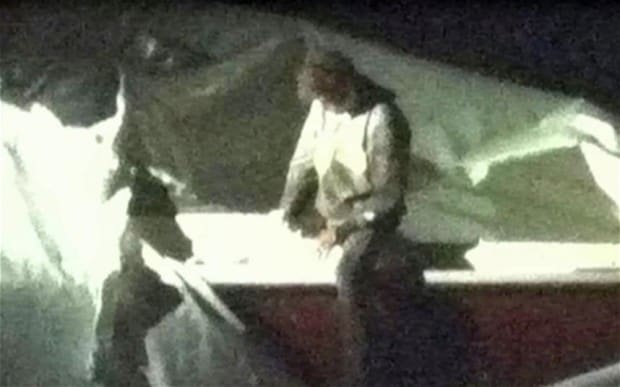
Sifting through the news threads trying to glimpse the photograph of the alleged bombers created a fueled anxiety that bordered on excitement. Before meeting Dale, I sat in my car turning page after page on a dying IPhone trying to get a closer glimpse of their faces. If I was able to see how they looked, perhaps their gaze would tell the story of why this crime had to be committed. These young men looked all too normal – their focused strides eerily everyday. It worried me to consider the average mind out there plotting revenge – plotting some message of violent overthrow. Were these social anarchists? Disguised foreign terrorists? Militia men? Or perhaps MIT students gone awry!
More is sure to be revealed.